AI Observability and System Monitoring: Key Takeaways
- AI observability uses machine learning and advanced analytics to monitor complex systems, detect anomalies, and improve operational visibility across modern digital platforms.
- Traditional monitoring tools track infrastructure metrics, while AI observability analyzes telemetry data across applications, infrastructure, and networks to identify patterns and predict failures.
- Organizations adopt AI observability to manage increasingly complex cloud-native environments, microservices architectures, and distributed systems.
- AI-powered monitoring platforms can detect system anomalies in real time by analyzing logs, metrics, traces, and user behavior across multiple environments.
- Observability platforms combine telemetry data with machine learning models to provide deeper insights into system performance and root causes of incidents.
- AI observability improves incident response by automating root cause analysis and reducing the time required to diagnose operational issues.
- DevSecOps teams rely on observability tools to maintain system reliability, track application performance, and monitor security events across distributed environments.
- Predictive analytics allows AI observability platforms to forecast potential system failures and performance degradation before they impact users.
- AI-driven monitoring supports modern IT operations by reducing alert fatigue and prioritizing the most critical operational events.
- Organizations that adopt AI observability gain improved system resilience, faster incident resolution, and deeper operational insights across their digital infrastructure.
Modern distributed systems have grown exponentially in complexity, with microservices, containerized applications, and cloud-native architectures creating intricate webs of interdependencies. Traditional observability approaches, while foundational, are struggling to keep pace with the volume, velocity, and variety of data these systems generate.
Enter AI-powered observability. AI Observability is a transformative approach that leverages artificial intelligence and machine learning to provide deeper insights, proactive problem detection, and intelligent automation in system monitoring.
The Limitations of Traditional Observability
Traditional observability relies heavily on predefined dashboards, static thresholds, and reactive alerting. While these methods provide visibility into system health, they come with significant limitations:
Alert Fatigue: Static thresholds generate numerous false positives, overwhelming operations teams with noise rather than actionable insights.
Reactive Nature: Most traditional tools only notify you after something has gone wrong, often when users are already experiencing issues.
Manual Correlation: Identifying root causes across distributed systems requires manual correlation of metrics, logs, and traces, which is a time-consuming and error-prone process.
Limited Context: Traditional monitoring lacks the contextual understanding needed to differentiate between normal system behavior and genuine anomalies.
The AI-Powered Observability Revolution
AI-powered observability transforms monitoring from a reactive discipline into a proactive, intelligent practice. By applying machine learning algorithms to telemetry data, these solutions can understand normal system behavior, detect subtle anomalies, predict potential issues, and automatically correlate events across complex distributed environments.
Where traditional monitoring tackles problems in silos, AI-powered observability deploys unified intelligence across every domain to create exponential impact. This integrated approach weaves intelligent solutions across metrics, logs, traces, user experience data, and business intelligence, not as separate data streams, but as interconnected, intelligent forces that amplify each other.
The Five Pillars of Intelligent Observability

Metrics Intelligence
AI-enhanced metric collection goes beyond simple threshold monitoring to provide dynamic baseline learning and predictive trend analysis. Intelligent algorithms continuously learn what constitutes normal behavior for your applications and infrastructure, creating adaptive baselines that evolve with your systems.
Log Analytics Excellence
Advanced natural language processing and pattern recognition transform raw log data into actionable insights. AI-powered log analysis automatically identifies anomalies, correlates events across distributed systems, and surfaces critical information buried in massive volumes of unstructured data.
Distributed Tracing Mastery
Intelligent trace analysis provides end-to-end visibility across complex microservices architectures. AI algorithms automatically map service dependencies, identify performance bottlenecks, and correlate distributed transactions to pinpoint root causes with unprecedented speed and accuracy.
User Experience Optimization
Real-user monitoring enhanced with AI provides deep insights into how system performance impacts actual user experiences. Predictive models can forecast user satisfaction issues before they manifest, enabling proactive optimization of critical user journeys. AI-powered observability also bridges the gap between technical metrics and business outcomes, providing the context needed to prioritize issues based on actual business impact rather than just technical severity.
Security & Compliance Management
AI-powered observability bridges technical security threat detection with regulatory-focused outcomes. Intelligent correlation engines connect system data with compliance KPIs and security baselines, providing context to prioritize incidents based on business risk. These systems enable continuous compliance monitoring while ensuring observability data meets governance, encryption, and audit requirements across systems.
Key Capabilities of AI-Powered Observability
Dynamic Baseline Learning: AI systems continuously learn what constitutes normal behavior for your applications and infrastructure, creating dynamic baselines that adapt to changing conditions rather than relying on static thresholds.
Anomaly Detection: Advanced algorithms can identify and communicate deviations from normal patterns, even subtle ones that might indicate emerging issues before they impact users.
Predictive Analytics: By analyzing historical patterns and current trends, AI can forecast potential problems, enabling proactive remediation before issues manifest.
Intelligent Root Cause Analysis: AI systems can automatically correlate events across metrics, logs, and traces to identify probable root causes, significantly reducing mean time to resolution (MTTR).
Contextual Alerting: Instead of generating alerts based on simple threshold breaches, AI-powered systems provide context-rich notifications that help teams understand not just what happened, but why it matters.
Business Outcomes
Organizations implementing AI-powered observability are seeing these transformative results:
Reduced Alert Noise: AI-powered systems can significantly reduce false positive alerts, allowing teams to focus on genuine issues that require attention.
Faster Problem Resolution: Intelligent root cause analysis and automated correlation can substantially reduce MTTR, transforming operational weaknesses into competitive advantages.
Proactive Issue Prevention: Predictive capabilities help teams address potential problems before they impact users, improving overall system reliability and customer satisfaction.
Operational Efficiency: Automation of routine monitoring tasks frees up engineering teams to focus on innovation rather than firefighting, accelerating time-to-market for new features and services.
Cost Optimization: AI can identify resource waste and optimization opportunities, leading to cost savings in cloud environments while reducing operational risks.
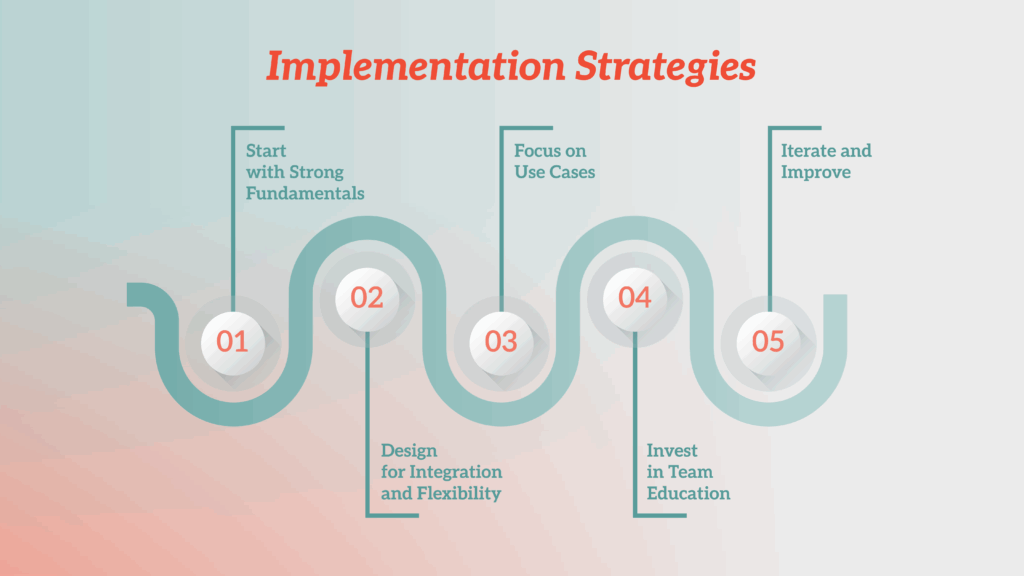
Implementation Strategies
Successfully implementing AI observability requires a strategic approach that targets the exact gaps holding your organization back:
Start with Strong Fundamentals: Ensure you have comprehensive instrumentation and data collection across all five pillars of observability. AI systems need high-quality, complete data to function effectively.
Design for Integration and Flexibility: Rather than seeking a single monolithic platform, focus on designing an observability architecture that leverages best-of-breed solutions across different domains while enabling seamless integration and intelligent cross-domain correlation. The key is selecting technologies that can work together effectively, whether that’s combining specialized AI-powered anomaly detection tools with existing monitoring infrastructure, or integrating multiple platforms through unified APIs and data pipelines.
Your technology choices should be driven by your specific requirements, existing investments, and organizational capabilities, not by vendor lock-in. The most successful implementations often blend multiple specialized solutions, perhaps using one platform’s superior AI capabilities for log analysis while leveraging another’s strength in distributed tracing, all unified through intelligent orchestration layers that provide holistic insights across your entire technology stack.
Focus on Use Cases: Begin with specific, high-impact use cases such as application performance monitoring or infrastructure optimization before expanding to broader observability scenarios across all five pillars.
Invest in Team Education: Ensure your teams understand how to interpret AI-generated insights and recommendations. The human element remains crucial in AI-powered systems, and organizational change management is essential for adoption success.
Iterate and Improve: AI models improve over time with more data and feedback. Establish processes for continuous refinement of your AI-powered observability practices across all domains.
Oteemo’s AI-Powered Agentic Observability Solutions
At Oteemo, we don’t just recognize the challenges of modern observability; we orchestrate AI-powered transformations that address them comprehensively. Our AI-powered agentic solutions are revolutionizing how organizations approach enterprise observability by deploying intelligent agents that work autonomously across all five pillars of observability.
Our agentic AI approach goes beyond traditional monitoring tools by creating intelligent agents that continuously learn, adapt, and act on your behalf. These agents don’t just identify issues; they understand context, predict impacts, and take autonomous remedial actions while keeping human operators informed and in control when needed.
Autonomous Intelligence in Action: Our Agentic AI approach allows us to continuously monitor your entire technology stack, automatically correlating signals across metrics, logs, traces, user experience data, and business context. When anomalies are detected, these agents don’t just alert; instead, they intelligently assess the situation, predict potential cascading effects, and can autonomously implement approved remediation strategies.
Unified Expertise Across Domains: Where other solutions tackle observability challenges in isolation, Oteemo’s integrated approach weaves AI-enhanced observability into your broader digital transformation journey. Our agentic solutions seamlessly integrate with AI-driven DevSecOps pipelines, intelligent infrastructure modernization efforts, and smart product development lifecycles, thereby creating a unified ecosystem where every component amplifies the others.
Transformative Results: Oteemo’s observability agents and services are driving faster incident resolution, proactive issue prevention, and automated optimization decisions that would traditionally require extensive human intervention. This isn’t just monitoring evolution, but it’s operational transformation that creates competitive advantages through sustained reliability and performance excellence.
The Future of Intelligent Operations
As AI-powered observability matures, we can expect to see even more sophisticated capabilities emerge. Natural language processing will enable conversational interfaces for querying system behavior across all five pillars simultaneously. Advanced correlation engines will provide deeper insights across increasingly complex architectures, automatically connecting technical and security performance with business outcomes.
Organizations that adopt AI-powered observability early will gain a sustained advantage that makes them industry leaders through improved reliability, reduced operational overhead, fortified systems, and enhanced user experiences.
FAQs about AI Observability
What is AI observability?
AI observability is the use of machine learning and advanced analytics to monitor system performance, detect anomalies, and provide deeper insights into complex digital environments.
How does AI observability differ from traditional monitoring?
Traditional monitoring tracks predefined metrics and alerts. AI observability analyzes large volumes of telemetry data to identify patterns, detect anomalies, and automate root cause analysis.
What types of data are used in observability platforms?
Observability platforms typically analyze telemetry data including system logs, infrastructure metrics, application traces, and user interaction data.
Why is observability important for cloud-native environments?
Cloud-native environments use microservices and distributed systems, which create complex interactions that require advanced monitoring to maintain system reliability.
How does AI improve system monitoring?
AI models can analyze large datasets in real time to detect anomalies, predict system failures, and automate incident analysis, improving operational efficiency.
What is the difference between monitoring and observability?
Monitoring focuses on tracking system health metrics, while observability provides deeper insights into how systems behave by analyzing telemetry data and identifying root causes of issues.
What role does observability play in DevSecOps?
Observability enables DevSecOps teams to continuously monitor system performance, detect security anomalies, and maintain reliability across software delivery pipelines.
What challenges do organizations face with traditional monitoring tools?
Traditional monitoring tools struggle with complex distributed architectures and often generate large volumes of alerts without providing clear insights into root causes.
What technologies are used for AI observability?
Common technologies include machine learning analytics engines, telemetry pipelines, distributed tracing systems, log aggregation platforms, and advanced monitoring dashboards.
How does AI observability improve incident response?
AI observability platforms can automatically analyze telemetry data to identify the root cause of incidents and provide recommendations for resolving operational issues.