The convergence of artificial intelligence (AI) and user observability represents one of the most significant shifts in how organizations can understand and optimize their digital experiences. Given applications are now critical drivers of business outcomes, it is essential to not only build performant and efficient digital operations, but to track user behavior and craft improved user experience for optimized business results. User-based data is essential to business decision-making, and the integration of AI into user observability platforms is transforming raw behavioral data into actionable intelligence that directly impacts business outcomes.
Beyond Traditional Analytics: The Rise of Intelligent Observability
Traditional user analytics have long provided snapshots of user behavior—page views, click rates, session duration—to help infer friction points and user preferences. While these metrics are valuable, they focus on what the users are doing rather than revealing the deeper story about the why and how behind user behavior. This information gap makes it difficult to correlate user experience with business performance.

AI-powered observability changes this paradigm by introducing contextual understanding for patterns, anomaly detection, and persona-/account-based usage that transforms how organizations interpret user data. This is critical because it powers predictive capabilities, allowing organizations to understand and deduce user needs and opportunities for improving service delivery before real frustration sets in. This shift from reactive to proactive insights enables organizations to address user experience issues before they impact business metrics, creating a more seamless connection between user satisfaction and revenue growth.
The Business Value of AI-enhanced User Metrics
Combining front-end analytics with back-end telemetry provides end-to-end insights along the full user journey; extracting meaning is linked to pulling the right data, not necessarily more data, so priority improvements are actioned. Since machine learning algorithms excel at processing vast amounts of user interaction data, analyzing millions of user sessions in minutes, AI continuously learns about users and evolving market preferences. AI can target key user observability data to hone on those key areas that will deliver measurable business impact.
This capability proves particularly useful for many key actors in the value chain. Combining information about interface elements, content arrangements, or interaction flows produces persona-based datasets that indicate opportunities for tailoring services for user segments. Product and business leaders can synthesize critical insights around users’ priorities and make investment decisions to maintain or strengthen user loyalty. For example, user journey data helps identify friction points and abandonment rates. Introduce AI-driven observability in the equation and you can quickly bypass the user drop-off metric to uncover specific combinations of user characteristics, behaviors and circumstantial information that pinpoint the drivers for abandonment. Instead of educated guesses, organizations can use data science to incrementally optimize system performance and overall user experience.
Simultaneously, engineers who manage capacity and service dependencies with complex architectures can analyze, trace, and evaluate performance across distributed components with reasonable confidence about how back-end activity will impact the user experience. The learning dimension of AI can support engineers with troubleshooting and upskilling on observability tools, enhancing awareness of upstream/downstream effects of back-end activity. Similarly, the scale and speed of usage patterns and system performance allow IT executives to expedite their decision cycles around operational costs, incident prevention, and infrastructure usage to adjust to service demands cost-effectively.
Real-Time Intelligence and Predictive Capabilities
One of the most powerful aspects of AI-driven observability is its ability to provide real-time insights. Traditional business intelligence systems often rely on historical data and batch processing, creating delays between user actions and business response times. AI observability platforms can use real-user monitoring (RUM) to analyze user behavior, offering businesses actionable data immediately to address emerging trends or potential issues.
This real-time capability proves especially valuable in identifying and addressing user experience problems before they escalate. AI offers predictive analytics for detecting unusual patterns in user behavior, performance metrics, or error rates and alerting teams or potential issues that merit investigation. This proactive approach helps maintain optimal user experiences and prevents minor problems from turning into incidents with major business impacts that are far more costly to resolve.
AI-powered predictive analytics can take this concept even further by forecasting user behavior and business outcomes based on current trends or market lifecycles. Organizations can anticipate changes in user engagement, predict which users or timeframes are susceptible to churn, and identify opportunities for offering additional or different services. These predictive insights enable more strategic business decisions and resource allocation with significant cost savings.
Personalization at Scale through Observability Data
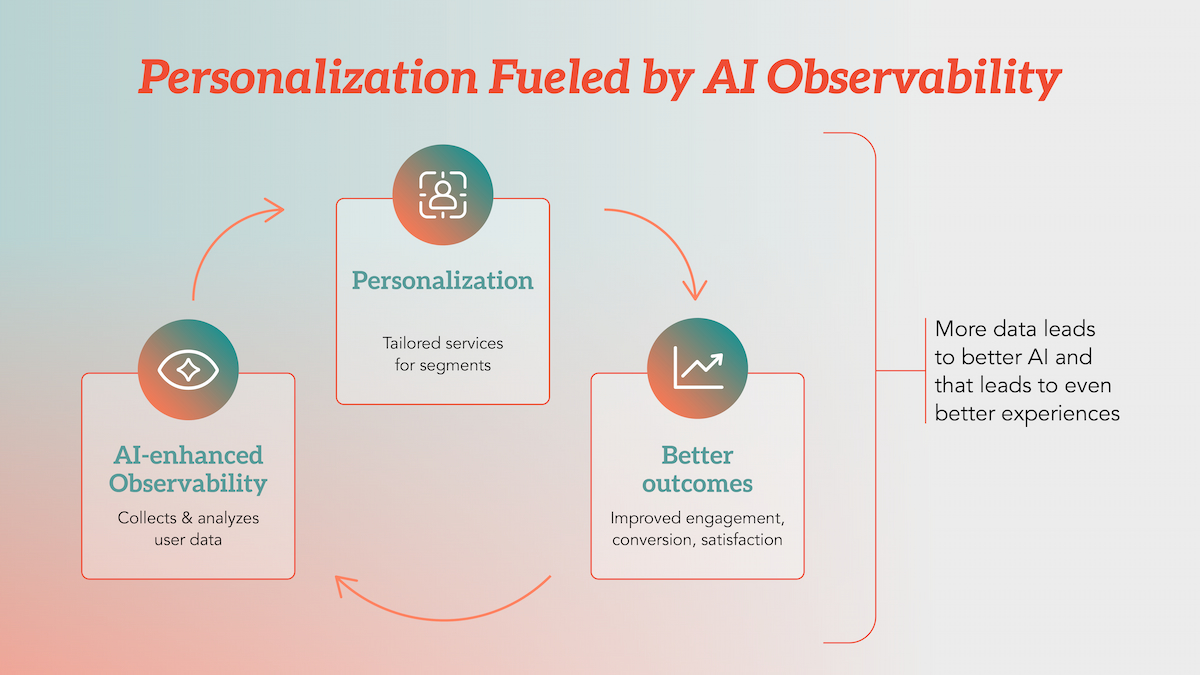
AI-enhanced user observability enables personalization strategies that would be impossible to implement manually. Comparative analysis of individual user behavior patterns alongside broader cohort data assists with service customization for user segments to optimize delivery strategies that are personalized and help sustain user loyalty. Such analysis can include behavioral, contextual, and predictive factors beyond simple demographics, as reflected in industry reports of significantly improving metrics around engagement, conversion, and satisfaction. The ability to process complex, multi-dimensional datasets yields results otherwise difficult to discover and translates to potentially substantial business impacts when harnessed effectively.
User-based personalization creates competitive advantages that compound over time. As observability data drives service and system changes, AI learns iteratively about the effects of improvements on users, creating a virtuous cycle where better user experiences lead to more engaged users, which generates more data for the AI system to extract meaning.
Conclusion: The Strategic Imperative
The integration of AI into user observability represents more than a technological upgrade—it’s a strategic imperative for organizations serious about competing in the digital economy. The ability to understand, predict, and optimize user experiences in real-time provides competitive advantages that compound over time.
The question for most organizations is not whether to integrate AI into their user observability strategies, but how quickly and effectively they can do so. The businesses that move first and execute well will establish advantages that become increasingly difficult for competitors to match, making AI-enhanced user observability a critical component of long-term business strategy.